



Hey there! As a supplier of Carbon Steel Threaded Tees, I've got a lot to share about the design considerations for these crucial components. Let's dive right in.
Material Selection
First off, the choice of carbon steel is a big deal. Carbon steel comes in different grades, each with its own properties. For a threaded tee, we need to pick a grade that offers the right balance of strength, ductility, and corrosion resistance. Generally, low - carbon steel is a popular choice as it's relatively easy to machine and has good weldability. But if the tee is going to be used in a high - stress environment, medium - or high - carbon steel might be more suitable. High - carbon steel provides greater strength but can be a bit more brittle.
Thread Design
The threads on a carbon steel threaded tee are super important. The thread type, pitch, and size all play a role in how well the tee will connect to other components. Common thread types include NPT (National Pipe Thread) and BSP (British Standard Pipe). NPT is widely used in North America, while BSP is more common in Europe and other parts of the world. The pitch of the thread determines how tightly the connection will be. A finer pitch means a more secure connection, but it might also be more difficult to install.
When it comes to thread size, it has to match the pipes or fittings it will be connected to. Using the wrong size can lead to leaks or a weak connection. So, we always make sure to double - check the thread size requirements based on the application.
Pressure Rating
Another key consideration is the pressure rating of the carbon steel threaded tee. Different applications have different pressure requirements. For example, in a water supply system, the pressure might be relatively low, but in an industrial pipeline for transporting chemicals or gases, the pressure can be extremely high. We need to design the tee to withstand the maximum pressure it will encounter in its intended use. This involves calculating the wall thickness of the tee based on the pressure and the material properties. Thicker walls can handle higher pressures, but they also increase the weight and cost of the tee.

End Connections
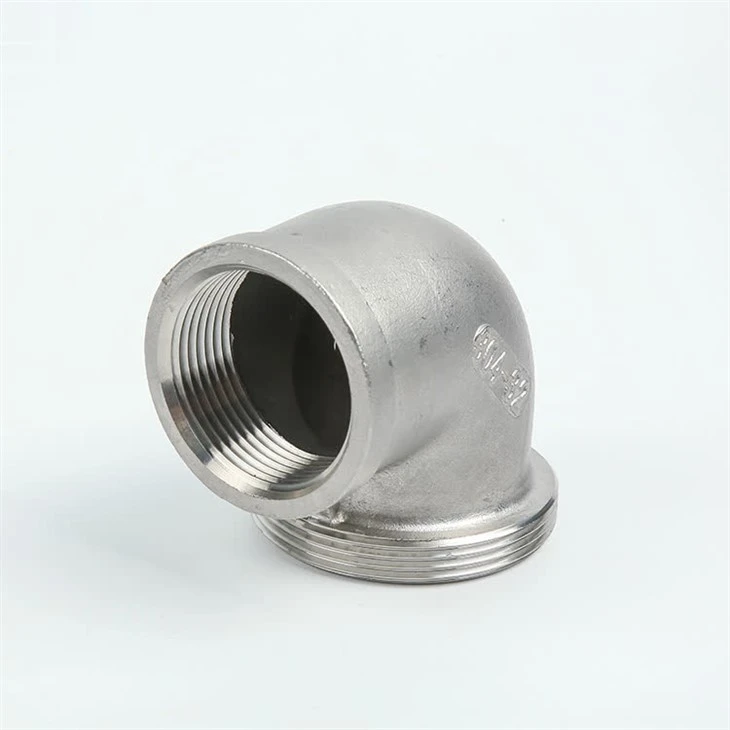
The end connections of the carbon steel threaded tee are also crucial. There are different types of end connections, such as male and female threads. Male threads are designed to fit into female threads on other components. The quality of the thread finish is important here. A smooth and accurate thread finish ensures a tight and leak - free connection. We also need to consider the type of sealing mechanism. Some applications might require the use of thread sealants or gaskets to prevent leaks.
Corrosion Resistance
Carbon steel is prone to corrosion, especially in harsh environments. To address this, we can apply various coatings or treatments to the tee. Galvanizing is a common method where a layer of zinc is applied to the surface of the steel. This zinc layer acts as a sacrificial anode, protecting the steel from corrosion. Another option is to use epoxy coatings, which provide a barrier between the steel and the environment. The choice of coating depends on the specific environment the tee will be used in. For example, in a marine environment, a more corrosion - resistant coating might be required.
Flow Characteristics
The design of the carbon steel threaded tee also affects the flow of fluids or gases through it. A well - designed tee should minimize pressure drop and turbulence. The internal diameter of the tee and the shape of the junction play important roles in this. A smooth and streamlined design can help to ensure a more efficient flow. For example, a tee with a gradual transition at the junction will cause less disruption to the flow compared to a tee with a sharp corner.
Compatibility with Other Components
When designing a carbon steel threaded tee, we need to consider its compatibility with other components in the system. It has to fit well with pipes, valves, and other fittings. The thread size and type must match, and the overall dimensions of the tee should be compatible with the layout of the system. For example, if the tee is going to be used in a tight space, we need to make sure it has a compact design.
Quality Control
Quality control is essential in the design and production of carbon steel threaded tees. We use various inspection methods to ensure that the tees meet the required standards. This includes visual inspection, dimensional inspection, and non - destructive testing such as ultrasonic testing and magnetic particle testing. These tests help to detect any defects in the tee, such as cracks or porosity, which could affect its performance.
Cost - Effectiveness
Finally, cost - effectiveness is an important consideration. We want to design a carbon steel threaded tee that offers good performance at a reasonable cost. This involves finding the right balance between material selection, manufacturing processes, and quality control. For example, using a less expensive grade of carbon steel might reduce the cost, but it could also affect the performance of the tee. So, we need to carefully evaluate all the factors to come up with a cost - effective design.
If you're in the market for high - quality Carbon Steel Threaded Tees, we've got you covered. We've put a lot of thought into the design of our tees to ensure they meet the highest standards. And if you're also interested in other related products, check out these links: Water Glass Casting Exhaust System Bracket, Stainless Steel Connector Elbow Joint, and Steel Precision Casting Parts.
If you have any questions or are interested in purchasing our Carbon Steel Threaded Tees, don't hesitate to reach out for a procurement discussion. We're here to help you find the best solution for your needs.
References
- ASME B16.11: Forged Fittings, Socket - Welding and Threaded
- ASTM A105/A105M: Standard Specification for Carbon Steel Forgings for Piping Applications
- API 602: Gate Valves, Globe Valves, Check Valves, and Ball Valves for Small Bore Piping