



Hey there! I'm a supplier of high-speed rail door hinges, and today I want to share with you how to test the quality of these crucial components. High-speed rail door hinges play a vital role in ensuring the safety and smooth operation of train doors, so it's super important to make sure they meet the highest standards.
Visual Inspection
First off, a good old visual inspection is always a great starting point. You can take a close look at the hinges to check for any obvious defects. Look for cracks, scratches, or any signs of damage on the surface. Pay attention to the finish of the hinges as well. A smooth and even finish usually indicates a well-made product. If you notice any rough edges or uneven surfaces, it could be a red flag.
Dimensional Accuracy
Next up is dimensional accuracy. High-speed rail door hinges need to fit precisely into the door mechanism. You'll need to use measuring tools like calipers and micrometers to check the key dimensions of the hinges. Make sure the length, width, and thickness are within the specified tolerances. Any deviation from the standard dimensions can lead to problems with the door's operation, such as difficulty in opening or closing.
Material Testing
The material of the hinges is another critical aspect. High-quality hinges are typically made from durable materials like stainless steel or high-strength alloys. You can perform material testing to determine the composition and properties of the hinge material. One common method is chemical analysis, which can tell you the exact elements present in the material. This helps ensure that the material meets the required specifications.
Another important material property is hardness. You can use a hardness tester to measure the hardness of the hinge. A proper hardness level is crucial for the hinge's durability and resistance to wear and tear. If the hinge is too soft, it may deform easily under stress, while a hinge that's too hard may be brittle and prone to cracking.
Load Testing
Load testing is a key part of evaluating the quality of high-speed rail door hinges. These hinges need to withstand a significant amount of force during normal use, as well as in emergency situations. You can use a load testing machine to apply a specific amount of force to the hinge and measure its performance.
There are different types of load tests you can conduct. For example, a static load test involves applying a constant force to the hinge for a certain period to see how it responds. A dynamic load test, on the other hand, simulates the actual opening and closing movements of the door and applies varying forces. This helps you assess the hinge's ability to handle real-world conditions.
Fatigue Testing
High-speed rail door hinges are subjected to repeated opening and closing cycles over their lifespan. Fatigue testing is designed to simulate these cycles and determine how well the hinge can withstand long-term use. You can use a fatigue testing machine to repeatedly open and close the hinge a large number of times.
During fatigue testing, you need to monitor the hinge for any signs of wear, cracking, or other damage. If the hinge fails the fatigue test, it means it may not be able to last for the expected service life. This information is crucial for ensuring the reliability of the high-speed rail doors.
Corrosion Resistance Testing
Since high-speed trains operate in various environments, the hinges need to be resistant to corrosion. You can conduct corrosion resistance testing by exposing the hinges to a corrosive environment, such as a salt spray chamber. This simulates the effects of moisture, salt, and other corrosive substances that the hinges may encounter in real-world conditions.
After a certain period of exposure, you can examine the hinges for any signs of corrosion. A high-quality hinge should show minimal or no corrosion, indicating that it has good corrosion resistance. This is important for maintaining the structural integrity of the hinges and ensuring the long-term performance of the high-speed rail doors.
Lubrication and Friction Testing
Proper lubrication is essential for the smooth operation of high-speed rail door hinges. You can test the lubrication properties of the hinge by measuring the friction coefficient. A low friction coefficient indicates that the hinge is well-lubricated and can operate smoothly.
You can use a friction testing machine to measure the friction between the moving parts of the hinge. This helps you determine if the lubrication is sufficient and if there are any issues with the hinge's movement. If the friction is too high, it can cause excessive wear and tear on the hinge, leading to premature failure.
Compatibility Testing
High-speed rail door hinges need to be compatible with the door system and other components. You can conduct compatibility testing to ensure that the hinges work well with the door frame, locking mechanism, and other related parts.
This involves installing the hinges on a test door and checking for any interference or alignment issues. You also need to make sure that the hinges can be easily installed and removed, as this is important for maintenance and replacement.
Real-World Testing
In addition to the laboratory tests, real-world testing is also crucial. You can install the hinges on actual high-speed trains and monitor their performance over a period of time. This allows you to observe how the hinges behave in real operating conditions and identify any potential issues that may not be detected in the laboratory.
Real-world testing can provide valuable feedback on the long-term reliability and durability of the hinges. It also helps you make any necessary adjustments or improvements to the hinge design or manufacturing process.

Conclusion
Testing the quality of high-speed rail door hinges is a comprehensive process that involves multiple steps and methods. By conducting thorough visual inspections, dimensional accuracy checks, material testing, load testing, fatigue testing, corrosion resistance testing, lubrication and friction testing, compatibility testing, and real-world testing, you can ensure that the hinges meet the highest quality standards.
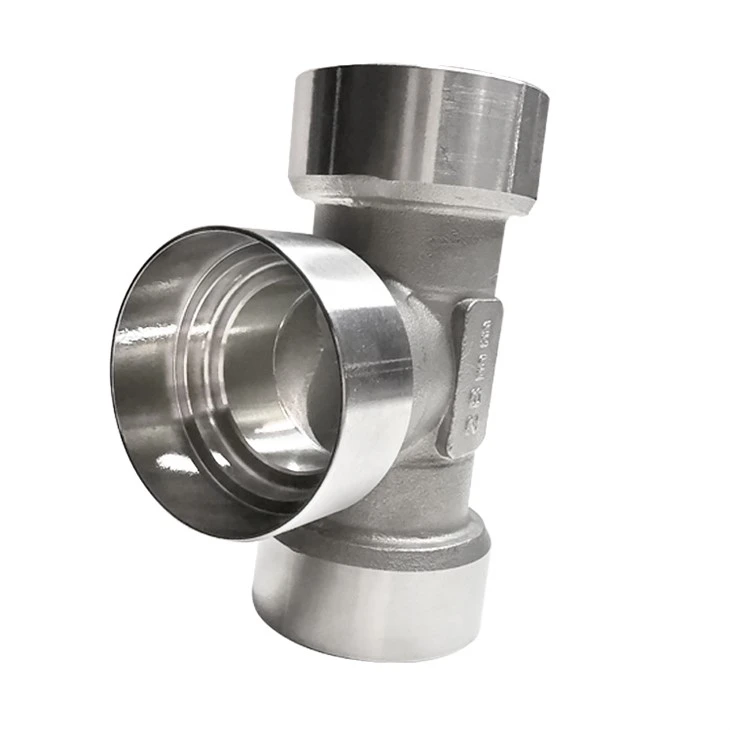
If you're in the market for high-quality high-speed rail door hinges, I'd love to have a chat with you. We offer a wide range of hinges that are designed and tested to meet the strict requirements of the high-speed rail industry. You can also check out some of our other products like Investment Casting Stainless Steel Tee Fittings, Steel Precision Casting Parts, and Container Crane Hoist Limit Connecting Block.
If you're interested in learning more or discussing a potential purchase, feel free to reach out. I'm always here to help you find the best solutions for your high-speed rail door hinge needs.
References
- Some textbooks on mechanical engineering related to hinge design and testing.
- Industry standards and specifications for high-speed rail door hinges.