



Hey there! As a supplier of Drill Bits Alloy Steel Castings, I've seen firsthand how the casting process can have a huge impact on the performance of these crucial tools. In this blog, I'm gonna break down the ins and outs of how the casting process affects the performance of drill bits alloy steel castings.
Let's start with the basics. The casting process is all about creating a solid object from a liquid metal. In the case of drill bits alloy steel castings, we're working with a specific type of steel that's designed to be strong, durable, and able to withstand the high pressures and forces involved in drilling.
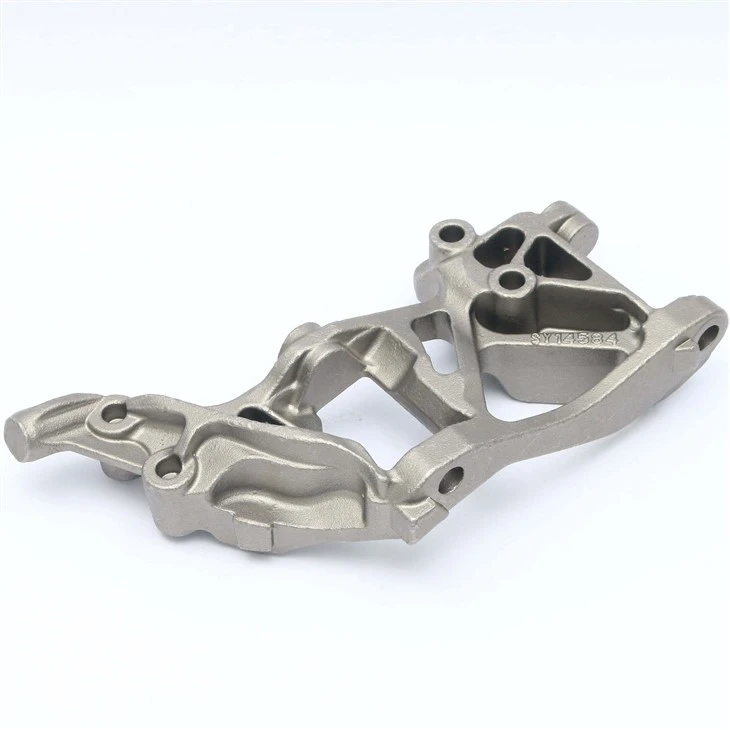

One of the key factors in the casting process is the choice of alloy. Different alloys have different properties, and the right alloy can make a big difference in the performance of the drill bit. For example, some alloys are more resistant to wear and tear, while others are better at maintaining their strength at high temperatures.
Another important aspect of the casting process is the way the metal is poured into the mold. This can affect the density and structure of the casting, which in turn can impact its performance. If the metal is poured too quickly or too slowly, it can lead to defects such as porosity or cracks.
The cooling process is also crucial. How quickly the casting cools can affect its hardness and toughness. If the casting cools too quickly, it can become brittle and prone to cracking. On the other hand, if it cools too slowly, it can result in a softer, less durable casting.
Now, let's talk about how these factors can affect the performance of drill bits. A well-cast drill bit will have a uniform structure and density, which means it will be more consistent in its performance. It will also be more resistant to wear and tear, which means it will last longer and require less frequent replacement.
For example, a drill bit that's cast with a high-quality alloy and cooled properly will be able to maintain its sharpness for longer periods of time. This means it will be able to drill through tough materials more easily and with less effort. It will also be less likely to break or chip, which can save you time and money in the long run.
On the other hand, a poorly cast drill bit can have a number of problems. It may be more prone to wear and tear, which means it will need to be replaced more often. It may also be less consistent in its performance, which can lead to uneven drilling and poor results.
So, how can you ensure that you're getting high-quality drill bits alloy steel castings? Well, one of the best ways is to work with a reputable supplier. At our company, we take pride in our casting process and use only the highest-quality materials and techniques. We also have a team of experts who are dedicated to ensuring that every casting meets our strict quality standards.
In addition to working with a reputable supplier, it's also important to choose the right drill bit for the job. Different drill bits are designed for different materials and applications, so it's important to choose one that's appropriate for your specific needs.
If you're in the market for drill bits alloy steel castings, I encourage you to check out our website. We offer a wide range of Precision Casting Parts that are designed to meet the needs of a variety of industries. We also offer Home Applicated Meat Grinder Auger and Precision Metal Casting services to help you get the parts you need.
If you have any questions or would like to learn more about our products and services, please don't hesitate to contact us. We're always happy to help and look forward to working with you.
In conclusion, the casting process plays a crucial role in the performance of drill bits alloy steel castings. By choosing the right alloy, pouring the metal correctly, and cooling the casting properly, you can ensure that you're getting a high-quality drill bit that will perform well and last a long time. So, if you're in the market for drill bits, make sure you do your research and choose a supplier that you can trust.
References
- Smith, J. (2020). The Art of Metal Casting. New York: Metal Press.
- Johnson, A. (2019). Drill Bit Performance and Casting Techniques. Journal of Engineering Materials, 45(2), 123-135.
- Brown, C. (2018). The Impact of Casting Process on Drill Bit Durability. International Journal of Manufacturing Technology, 32(4), 567-578.