



Hey there! As a supplier in the precision steel casting industry, I'm super stoked to chat with you about the materials we use in this fascinating process. Precision steel casting is all about creating high - quality, detailed metal parts, and the choice of materials plays a huge role in determining the final product's performance and quality.
Let's start with the basics. One of the most commonly used materials in precision steel casting is carbon steel. Carbon steel is a go - to for many applications because it's relatively inexpensive and offers a good balance of strength and ductility. The carbon content in carbon steel can vary, and this variation affects its properties. Low - carbon steel, for example, has less than 0.3% carbon. It's easy to form and weld, making it great for parts that require a lot of shaping. Medium - carbon steel, with a carbon content between 0.3% and 0.6%, offers higher strength but is a bit less ductile. High - carbon steel, with over 0.6% carbon, is extremely strong and hard, but it can be brittle. We often use carbon steel for things like machinery parts, automotive components, and construction hardware. You can learn more about the general concept of Precision Metal Casting on our website.
Another popular material is stainless steel. Stainless steel is a game - changer in precision steel casting. It contains chromium, which forms a thin, protective oxide layer on the surface, making it resistant to corrosion. This makes stainless steel ideal for applications where the parts will be exposed to moisture, chemicals, or harsh environments. There are different grades of stainless steel, such as 304 and 316. Grade 304 is the most widely used austenitic stainless steel. It's non - magnetic, has good corrosion resistance, and is easy to fabricate. Grade 316, on the other hand, contains molybdenum, which gives it even better corrosion resistance, especially against chloride - containing environments like seawater. We use stainless steel in a wide range of industries, from food and beverage processing to marine equipment. Check out our Stainless Steel Precision Casting page for more details.
Alloy steels are also a big part of our precision steel casting business. Alloy steels are made by adding other elements, such as nickel, chromium, molybdenum, or vanadium, to carbon steel. These additional elements enhance the steel's properties, like strength, hardness, toughness, and heat resistance. For example, nickel can improve the steel's toughness and corrosion resistance, while molybdenum can increase its strength at high temperatures. Alloy steels are often used in high - performance applications, such as aerospace components, turbine parts, and high - end automotive engines. Our Engineered Precision Castings section has more information on how we use alloy steels to create top - notch parts.
In addition to these steels, we also work with some specialty materials in precision steel casting. One such material is tool steel. Tool steel is designed to be extremely hard and wear - resistant, which makes it perfect for making tools like punches, dies, and cutting tools. It has a high carbon content and often contains other alloying elements like tungsten, molybdenum, and vanadium to enhance its performance.
Another specialty material is heat - resistant steel. Heat - resistant steel can withstand high temperatures without losing its strength or shape. This is crucial for applications in the power generation industry, such as in boilers and turbines, as well as in the automotive exhaust systems.
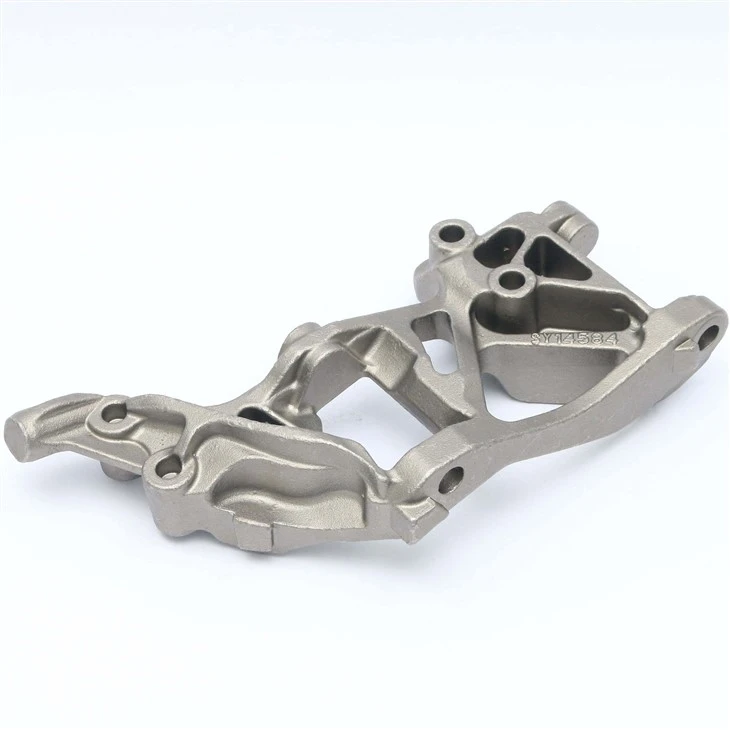

When it comes to choosing the right material for a specific precision steel casting project, there are several factors we consider. First and foremost is the application of the final part. If the part will be used in a corrosive environment, stainless steel is probably the way to go. If it needs to withstand high stresses, alloy steel or carbon steel might be more suitable.
Cost is also an important factor. Some materials, like certain grades of stainless steel or high - alloy tool steel, can be quite expensive. We work closely with our customers to balance the performance requirements of the part with its cost. Sometimes, we can find alternative materials that offer similar performance at a lower price.
The manufacturing process itself also influences the material choice. For example, some materials are easier to cast than others. If a part has complex geometries, we need to choose a material that can flow well during the casting process to ensure that all the details are accurately reproduced.
As a precision steel casting supplier, we're always striving to provide the best solutions for our customers. We have a team of experts who are well - versed in the properties of different materials and can help customers make the right material choices for their projects.
If you're in the market for precision steel castings, whether it's for a small - scale project or a large - volume production run, we'd love to hear from you. We can offer you a wide range of materials, high - quality casting services, and competitive prices. Don't hesitate to reach out to us for a quote or to discuss your specific requirements. Let's work together to bring your ideas to life!
References
- "Metallurgy for Dummies" by Jeff Williams
- "The Science and Engineering of Materials" by Donald R. Askeland and Pradeep P. Phule