



As a supplier of Casting Tilger Weight, I've seen firsthand how temperature can throw a real wrench in the works. You might be scratching your head, thinking, "How on earth does temperature mess with a simple casting weight?" Well, let me break it down for you.
First off, let's talk about what happens when the temperature is too high during the casting process. When we're making Casting Tilger Weights, we start with molten metal. If the temperature of this molten metal is way too high, it can cause some serious issues. For one, the metal becomes more fluid. Sounds like a good thing, right? Not always. This increased fluidity means the metal can flow into places it's not supposed to, leading to defects in the casting. You might end up with thin spots or even cracks in the Tilger Weight. And nobody wants a defective weight - it won't perform as it should, and it could even be a safety hazard.
Another problem with high temperatures is that it can cause the metal to react more with the atmosphere. Oxygen in the air can start to bond with the metal, creating oxides. These oxides can form on the surface of the casting, making it rough and reducing its strength. It's like building a house on a weak foundation - the whole thing starts to fall apart. And in the case of our Casting Tilger Weights, that's not something we can afford.
Now, let's flip the script and talk about low temperatures. When the temperature drops too low, the molten metal starts to solidify too quickly. This can lead to incomplete filling of the mold. You end up with a weight that's missing parts or has air pockets inside. It's like trying to bake a cake and taking it out of the oven too soon - it's just not going to turn out right. And just like a half - baked cake, a Casting Tilger Weight with air pockets or missing sections isn't going to be up to par.
The cooling rate also plays a huge role. If the casting cools too fast, it can create internal stresses. These stresses can cause the weight to warp or crack over time. It's similar to how a glass can shatter if you pour boiling water into a cold one. The sudden change in temperature creates stress that the material can't handle. In the case of our Casting Tilger Weights, these internal stresses can lead to premature failure, and that's a big no - no for our customers.
But it's not just the casting process itself that's affected by temperature. Storage and transportation also come into play. If Casting Tilger Weights are stored in a place with extreme temperatures, it can cause them to expand or contract. This expansion and contraction can lead to changes in the weight's dimensions. And when it comes to weights, precision is key. Even a small change in dimensions can throw off the accuracy of the weight, which is a major problem for industries that rely on precise measurements.
For example, in the manufacturing of Food Grade Stainless Steel Grinding Plates, precise weights are often needed to ensure the proper functioning of the equipment. If the Casting Tilger Weights used in this process are affected by temperature - induced dimensional changes, it can lead to inefficiencies and even product defects.
Similarly, in Precision Metal Casting, where every detail matters, temperature - related issues with Casting Tilger Weights can have a cascading effect on the entire production process. And in the production of Water Glass Casting Parts, accurate weights are crucial for maintaining the integrity of the casting.
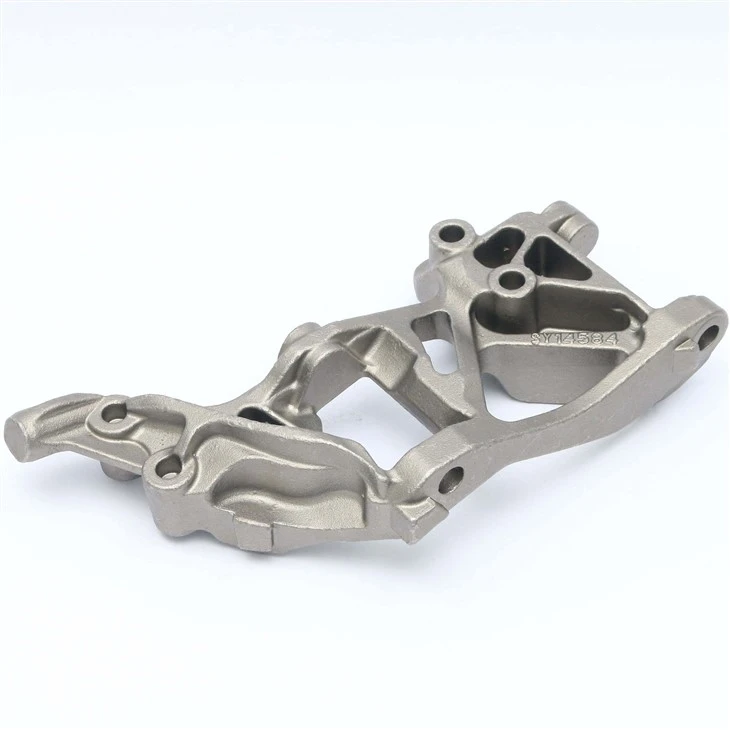

So, what can we do to combat these temperature - related problems? Well, first of all, we have to closely monitor the temperature during the casting process. We use advanced temperature sensors to make sure the molten metal is at the right temperature. This helps us avoid issues like excessive fluidity or premature solidification.
During storage and transportation, we also take precautions. We store the Casting Tilger Weights in climate - controlled environments to prevent any unwanted expansion or contraction. And when it comes to shipping, we make sure the weights are properly insulated to protect them from extreme temperatures.
As a supplier, I understand that our customers rely on us to provide high - quality Casting Tilger Weights. That's why we're constantly researching and improving our processes to minimize the impact of temperature. We know that a small temperature change can make a big difference in the quality of our products.
If you're in the market for Casting Tilger Weights, you want a supplier who understands these temperature - related issues and takes the necessary steps to prevent them. That's where we come in. We're committed to providing you with weights that meet the highest standards of quality and accuracy. Whether you need weights for a small - scale project or a large industrial application, we've got you covered.
So, if you're interested in learning more about our Casting Tilger Weights or have any questions about how temperature affects them, don't hesitate to reach out. We're here to help you make the right choice for your needs. Let's start a conversation and see how we can work together to get you the best Casting Tilger Weights on the market.
References
- Metal Casting Handbook (Author, Publication Year)
- Temperature Effects in Industrial Manufacturing Processes (Author, Publication Year)