



Hey there! As a supplier of Casting Tilger Weight, I've spent a fair amount of time diving into the ins and outs of the casting process. One factor that really stands out in affecting the quality and characteristics of Casting Tilger Weight is the cooling rate. In this blog, I'm gonna share with you how the cooling rate impacts Casting Tilger Weight and why it matters for us suppliers and you buyers.
What is Casting Tilger Weight?
Before we jump into the cooling rate stuff, let's quickly chat about what Casting Tilger Weight is. Casting Tilger Weight is a crucial component in various industries. It's made through the casting process, where molten metal is poured into a mold and then allowed to solidify. This weight is used for balancing, counter - acting forces, and ensuring the smooth operation of machinery. Whether it's in automotive, aerospace, or industrial equipment, Casting Tilger Weight plays a vital role.
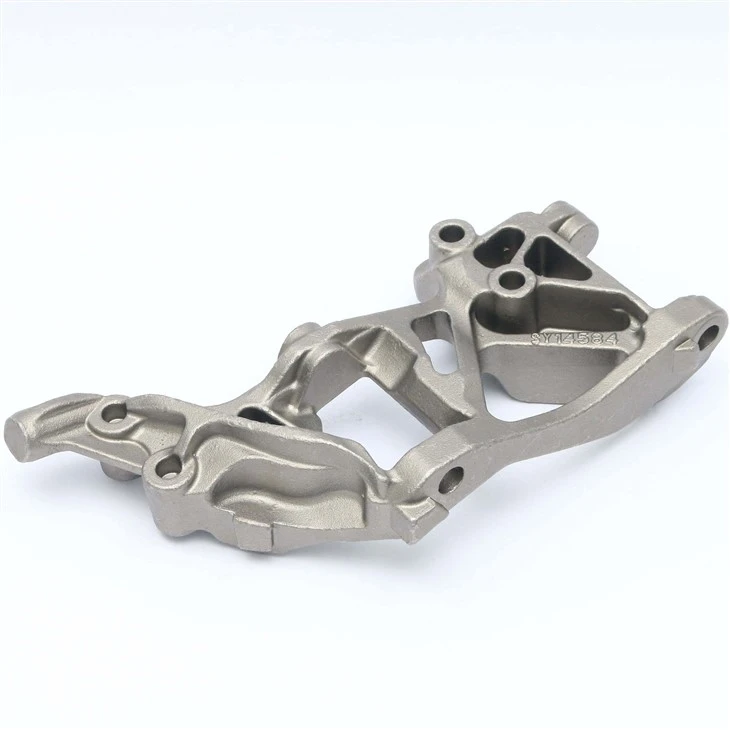

The Basics of Cooling Rate in Casting
The cooling rate in casting refers to how fast the molten metal in the mold loses heat and turns into a solid. It's not as simple as just letting the metal cool on its own. There are a bunch of factors that can influence the cooling rate, like the type of mold material, the thickness of the casting, and the initial temperature of the molten metal.
For example, if we use a mold made of a material that conducts heat well, like copper, the molten metal will cool down faster compared to a mold made of a poor heat - conducting material like ceramic. Also, a thinner casting will cool more quickly than a thicker one because there's less mass for the heat to dissipate from.
How Cooling Rate Affects Casting Tilger Weight
Microstructure Formation
One of the most significant ways the cooling rate affects Casting Tilger Weight is through the formation of its microstructure. When the molten metal cools rapidly, the atoms in the metal don't have much time to arrange themselves into large, well - ordered crystals. This results in a fine - grained microstructure. On the other hand, a slow cooling rate allows the atoms to move around more freely and form larger crystals, leading to a coarse - grained microstructure.
A fine - grained microstructure generally gives the Casting Tilger Weight better mechanical properties. It has higher strength, hardness, and toughness. This means that the weight can withstand more stress and wear in its application. For instance, in automotive applications, a Casting Tilger Weight with a fine - grained microstructure can better handle the vibrations and forces during the vehicle's operation.
Porosity and Shrinkage
The cooling rate also has a big impact on porosity and shrinkage in the Casting Tilger Weight. Porosity refers to the presence of small holes or voids in the casting, while shrinkage is the reduction in volume as the metal solidifies.
When the cooling rate is too slow, the metal has more time to shrink, and it can form large shrinkage cavities. These cavities weaken the casting and can lead to premature failure. On the contrary, a very fast cooling rate can cause the outer layer of the casting to solidify quickly, trapping gas bubbles inside and creating porosity.
We need to find that sweet spot in the cooling rate to minimize both porosity and shrinkage. This ensures that the Casting Tilger Weight has a dense and uniform structure, which is essential for its performance.
Dimensional Accuracy
Dimensional accuracy is another critical aspect affected by the cooling rate. As the metal cools and solidifies, it contracts. If the cooling is uneven, different parts of the Casting Tilger Weight will contract at different rates, leading to warping and distortion.
A well - controlled cooling rate helps to ensure that the casting cools uniformly, maintaining its intended dimensions. This is especially important when the Casting Tilger Weight needs to fit precisely into a specific assembly. For example, in aerospace applications, even a small deviation in the dimensions of the weight can cause significant problems in the overall performance of the aircraft.
Our Experience as a Casting Tilger Weight Supplier
Over the years, we've learned a lot about how to control the cooling rate to produce high - quality Casting Tilger Weight. We've experimented with different mold materials, cooling methods, and process parameters.
We use advanced technologies to monitor and adjust the cooling rate in real - time. For example, we have sensors in the molds that can measure the temperature at different points and send the data to a control system. This allows us to make immediate adjustments to ensure that the cooling rate is within the optimal range.
We also offer a variety of casting services, such as Precision Metal Casting, which requires even more precise control of the cooling rate to achieve the desired level of accuracy and quality. Another example is our Mirror Polishing Meat Grinder Body and Casting 42CrMo Gear Shift Lever products, where the cooling rate plays a crucial role in determining the final properties of the castings.
Why It Matters to You as a Buyer
If you're in the market for Casting Tilger Weight, understanding the impact of the cooling rate can help you make a more informed decision. A high - quality casting with the right cooling rate will have better performance, longer service life, and fewer issues in your application.
You don't want to end up with a Casting Tilger Weight that has poor mechanical properties, excessive porosity, or inaccurate dimensions. By choosing a supplier like us who knows how to control the cooling rate effectively, you can be confident that you're getting a product that meets your requirements.
Contact Us for Your Casting Tilger Weight Needs
If you're interested in purchasing Casting Tilger Weight or have any questions about our products and services, don't hesitate to get in touch. We're always here to help you find the best solution for your specific needs. Whether you need a small batch for a prototype or a large - scale production order, we've got you covered.
References
- Campbell, J. (2003). Castings. Butterworth - Heinemann.
- Flemings, M. C. (1974). Solidification Processing. McGraw - Hill.
- Ruddle, D. (2012). Metal Casting: A Practical Guide. Industrial Press Inc.