



Hey there! As a supplier of Engineered Precision Castings, I often get asked how these castings stack up against forgings when it comes to performance. Well, let's dive right in and break it down.
1. Basics of Engineered Precision Castings and Forgings
First off, let's quickly go over what each of these is. Engineered Precision Castings involve pouring molten metal into a mold to create a part. This process allows for complex shapes and detailed designs. You can check out more about Engineered Precision Castings on our website.
Forgings, on the other hand, are made by shaping metal using compressive forces. A piece of metal is heated and then hammered, pressed, or rolled into the desired shape. This process is known for its ability to align the metal's grain structure, which can have a big impact on performance.
2. Strength and Durability
When it comes to strength, forgings have a bit of a reputation for being tough. The compressive forces used in forging align the metal's grain structure in a way that can make it stronger and more resistant to fatigue. This is especially important in applications where parts are subjected to high stress or repetitive loading.
However, Engineered Precision Castings shouldn't be underestimated. With advancements in casting technology, we can now produce castings with excellent strength properties. For example, our High Strength 17 - 4PH material auto bracket is made using precision casting techniques and offers high strength and durability. The 17 - 4PH material is known for its corrosion resistance and good mechanical properties, making it suitable for a variety of automotive applications.
In some cases, the design of the part can also play a role. Precision castings can be designed with internal structures and features that enhance strength. For instance, we can add ribs or thickened sections in strategic locations to improve the part's load - bearing capacity.
3. Complexity of Design
This is where Engineered Precision Castings really shine. The casting process allows us to create parts with extremely complex shapes that would be very difficult or even impossible to achieve with forgings. We can produce parts with intricate internal cavities, thin walls, and detailed surface features.
Take our Bit Guide Water Glass Alloy Steel Castings as an example. These castings have a complex design that is optimized for their specific function. The ability to create such detailed parts in a single casting operation saves time and reduces the need for additional machining or assembly steps.
Forgings, on the other hand, are more limited in terms of design complexity. The compressive forces used in forging can make it challenging to form parts with sharp corners, deep recesses, or complex geometries. This often means that forgings may require more machining after the forging process to achieve the final shape, which can increase costs and lead times.
4. Cost - Effectiveness
Cost is always a major consideration in any manufacturing process. Engineered Precision Castings can be more cost - effective in certain situations. The ability to create complex parts in a single casting operation reduces the need for multiple manufacturing steps and assembly. This can save on labor costs, material waste, and machining time.
In addition, casting can be a more efficient process for producing small to medium - sized batches of parts. The setup costs for casting are generally lower compared to forging, especially when it comes to creating molds. Once the mold is made, we can produce multiple parts with consistent quality.
Forgings, however, may be more cost - effective for large - scale production of simple - shaped parts. The high - volume production can offset the higher initial setup costs, and the strength and durability of forgings can make them a more economical choice in the long run for applications where part failure can be extremely costly.
5. Surface Finish and Dimensional Accuracy
Engineered Precision Castings can offer excellent surface finish and dimensional accuracy. Modern casting techniques allow us to control the cooling rate of the molten metal, which can result in a smooth surface finish. We can also achieve tight dimensional tolerances, reducing the need for extensive post - machining.
Forgings may require more machining to achieve the desired surface finish and dimensional accuracy. The initial forging process can leave a rough surface, and additional machining steps are often needed to meet the required specifications. This can add to the overall cost and production time of the part.
6. Material Selection
Both Engineered Precision Castings and forgings offer a wide range of material options. However, casting may have an edge when it comes to using certain alloys. The casting process can accommodate a broader range of metals and alloys, including those with complex compositions.

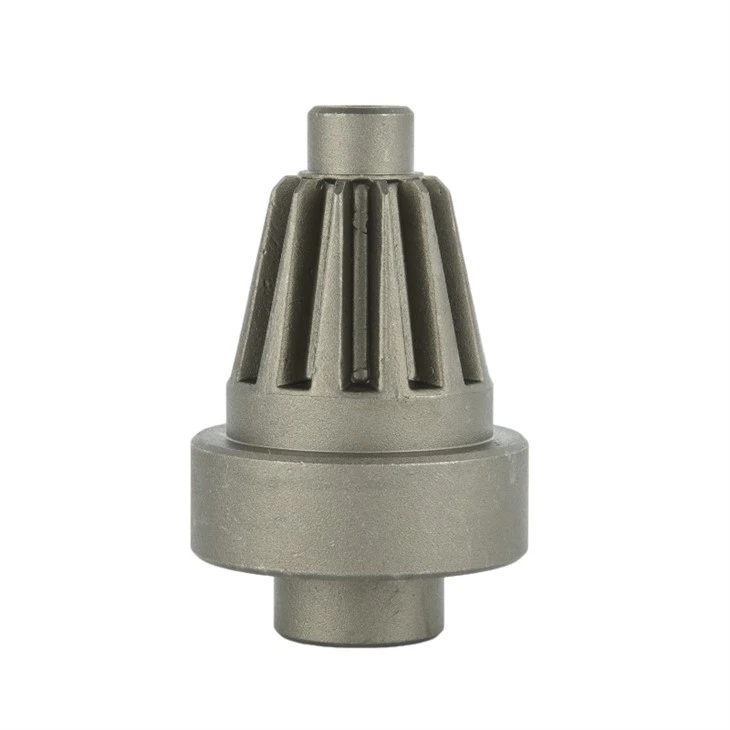
We can use specialized alloys in our precision castings to meet specific performance requirements. For example, some alloys offer better corrosion resistance, high - temperature performance, or electrical conductivity. This flexibility in material selection allows us to tailor the parts to the unique needs of our customers.
Forgings are also available in a variety of materials, but the forging process may be more limited in terms of the types of alloys that can be used. Some alloys may be difficult to forge due to their high hardness or brittleness.
Conclusion
So, how do Engineered Precision Castings compare to forgings in terms of performance? Well, it really depends on the specific application. If you need a part with a complex design, excellent surface finish, and cost - effective production for small to medium - sized batches, Engineered Precision Castings are a great choice. They offer a wide range of material options and can be designed to have good strength and durability.
On the other hand, if you're looking for a part that needs to withstand extremely high stress and fatigue, and you're producing large quantities of simple - shaped parts, forgings may be the better option.
As a supplier of Engineered Precision Castings, we're always here to help you make the right choice for your project. Whether you're in the automotive, aerospace, or any other industry, we can work with you to understand your requirements and provide the best solution. If you're interested in learning more about our products or have a specific project in mind, don't hesitate to reach out for a purchase negotiation. We're ready to discuss your needs and find the perfect engineered precision casting solution for you.
References
- ASM Handbook, Volume 15: Casting
- Metals Handbook Desk Edition, Third Edition
- "Manufacturing Engineering & Technology" by S. Kalpakjian and S. Schmid