



Hey there! I'm a supplier in the alloy steel investment casting business, and today I wanna chat about how wax patterns are made for alloy steel investment casting. It's a super important step in the whole process, and understanding it can give you a better grasp of what goes into creating high - quality alloy steel castings.
The Basics of Wax Patterns in Investment Casting
First off, why are wax patterns so crucial? Well, in alloy steel investment casting, the wax pattern is like a blueprint in physical form. It's an exact replica of the final part we want to make. The molten alloy steel will later take the shape of this wax pattern, so getting it right from the start is key.
Materials for Wax Patterns
The wax used for making these patterns is usually a special blend. It needs to have certain properties. For one, it has to be easy to shape. We don't want a wax that's too hard or brittle, or it'll crack when we try to form it into the desired pattern. On the other hand, it shouldn't be too soft either, or it'll lose its shape during handling.
Commonly, we use a mixture of natural and synthetic waxes. Natural waxes, like beeswax, can give the wax pattern a nice smooth finish. Synthetic waxes, on the other hand, can be engineered to have specific melting points and mechanical properties. This combination helps us get the best of both worlds.
Making the Pattern - The Injection Molding Process
The most common way to make wax patterns is through injection molding. It's a pretty cool process. First, we have a mold. This mold is made of metal, usually steel, and it's precisely machined to the shape of the part we want to cast.
We heat the wax until it turns into a liquid state. The temperature has to be just right - not too hot, or the wax might break down, and not too cold, or it won't flow properly. Once the wax is in a good, fluid state, we use a high - pressure injection machine. This machine forces the molten wax into the mold at a high speed.
The pressure is important because it ensures that the wax fills every nook and cranny of the mold. It's like filling a really detailed puzzle with liquid. After the wax is injected, we let it cool and solidify. This usually takes a few minutes, depending on the size and complexity of the pattern.

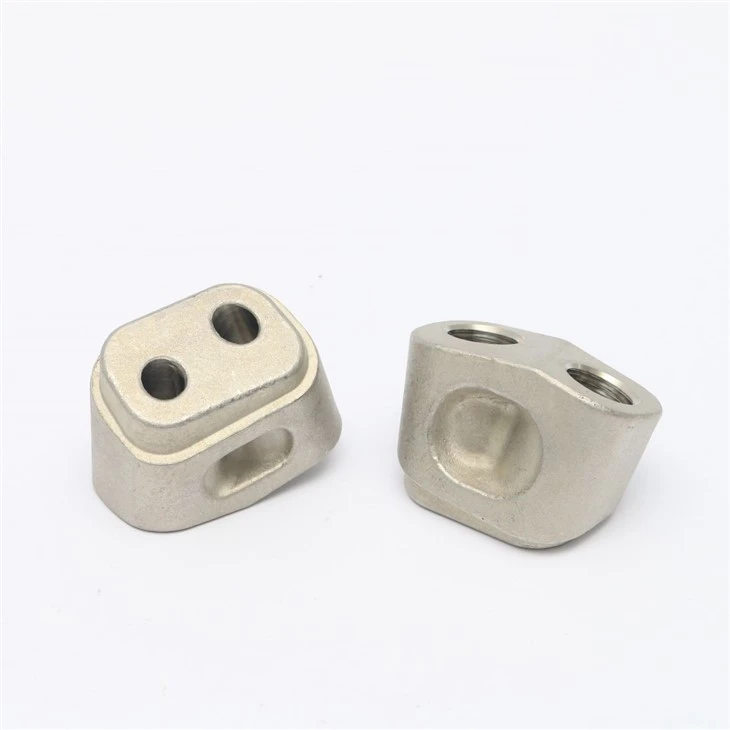
Once the wax has solidified, we open the mold, and there's our wax pattern! It's a perfect copy of the inside of the mold. Sometimes, there might be a little excess wax around the edges, which we call flash. We just trim that off with a sharp knife or a special tool.
Assembly of Wax Patterns
In many cases, a single wax pattern isn't enough. We often need to make multiple patterns and assemble them together. For example, if we're making a complex part with different sub - components, we'll make each sub - component as a separate wax pattern and then join them.
We use a special wax adhesive to stick the patterns together. This adhesive has to be strong enough to hold the patterns in place during the subsequent steps of the investment casting process. It also needs to have a similar melting point to the wax patterns so that it doesn't cause any issues when the wax is removed later.
Quality Control of Wax Patterns
Before we move on to the next steps of the investment casting process, we have to make sure the wax patterns are of high quality. We do a visual inspection first. We look for any cracks, bubbles, or other defects on the surface of the pattern.
We also measure the dimensions of the pattern. It has to be within a very tight tolerance range. Even a small deviation in size can lead to a final casting that doesn't fit properly or doesn't meet the required specifications. If we find any issues, we either try to fix the pattern or, if it's too damaged, we make a new one.
Wax Patterns in Different Applications
Wax patterns are used in a wide range of applications. For example, in the production of Investment Casting Door Hinges, the wax patterns are made to the exact shape and size of the hinges. This ensures that the final alloy steel hinges are strong, durable, and fit perfectly into the doors.
Another example is the 1.4837 Material Casting Oxygen Sensor Boss. The wax pattern for this part has to be extremely precise because the oxygen sensor boss needs to work accurately in the engine. A small error in the wax pattern could lead to a faulty sensor boss, which could cause problems in the engine's performance.
And then there are Investment Casting Chassis Bracket. These brackets are used to support various components in a vehicle's chassis. The wax patterns for these brackets are made to withstand high loads and stresses, so the quality and precision of the patterns are crucial.
Conclusion and Call to Action
So, that's a rundown of how wax patterns are made for alloy steel investment casting. It's a detailed and precise process, but it's what allows us to create high - quality alloy steel castings for a wide range of applications.
If you're in the market for alloy steel investment castings, whether it's door hinges, oxygen sensor bosses, chassis brackets, or any other custom parts, we're here to help. We have the expertise and the facilities to make top - notch wax patterns and, ultimately, excellent castings. Don't hesitate to reach out to us for a quote or to discuss your specific requirements. We're always happy to talk about how we can meet your needs with our alloy steel investment casting solutions.
References
- Campbell, J. (2003). Castings. Butterworth - Heinemann.
- Flemings, M. C. (1974). Solidification Processing. McGraw - Hill.