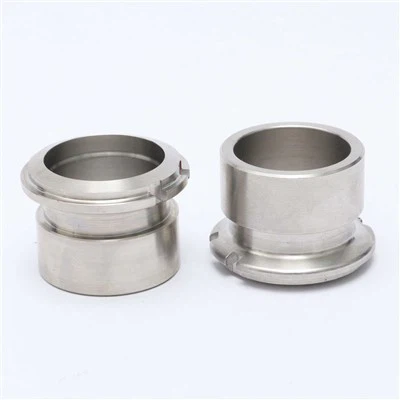
One Process, Many Components
Rather than being tied to a single part type, water glass casting scales across:
- Gear blanks and transmission components
- Structural brackets, arms, and levers
- Housings and enclosures
- General mechanical and machinery parts
The same shell-casting process and the same three core grades cover all of it, which keeps quoting and tooling straightforward whether you're ordering a single part or sourcing Alloy Steel Water Glass Casting Components across an entire product line.
Grade Guide
|
Grade |
Strength Profile |
Typical Component |
|
42CrMo |
Highest strength and hardenability |
High-load gears, shafts, drivetrain parts |
|
40Cr |
Solid strength at a lower cost than 42CrMo |
Medium-load structural components |
|
35CrMo |
Prioritizes toughness and fatigue resistance |
Parts under cyclic or impact loading |
From Drawing to Finished Part
- Wax pattern built to the component geometry
- Ceramic shell built in sodium silicate (water glass) slurry
- Dewax and casting in the specified alloy steel grade
- Heat treatment, normalizing, quenching, and tempering, to target hardness
- CNC machining of critical bores, mounting faces, and threads
- Final inspection, cleaning, and export packaging
Production Process Introduce


Specifications
|
Item |
Detail |
|
Casting tolerance |
±0.2–0.5mm as-cast |
|
Machined tolerance |
±0.02–0.05mm on critical features |
|
Surface finish |
Ra 6.3–12.5μm as-cast; Ra 1.6μm or better on machined surfaces |
|
Heat treatment |
To your specified hardness range |
|
Supply format |
Customer drawing, physical sample, or reverse-engineered CAD model |
Where a Finer Process Makes More Sense
Water glass casting isn't the right call for every part. If your component is small, thin-walled, or needs a fine as-cast surface, decorative hardware, for instance, silica sol casting usually delivers a better result for a similar cost. We'll say so plainly if your drawing fits that category rather than defaulting you into the wrong process.
Where It's Used
- Agricultural and construction machinery
- Transmission and drivetrain systems
- General industrial equipment
- OEM replacement part programs
Customization
Shape, grade, hardness, and finish are matched to your component. Send a drawing if you're specifying a new part, or a physical sample if you're sourcing a replacement, we'll confirm fit and flag anything better suited to a different process or alloy.
Built-In Quality Checks
|
Stage |
Check |
|
Incoming material |
Spectrometer verification of alloy composition |
|
After casting |
Visual and dimensional inspection before machining |
|
After heat treatment |
Hardness testing against target range |
|
Before shipping |
CMM measurement against the drawing |
Material certificates, hardness test reports, and dimensional reports are available with every order on request.
FAQ
|
Q1: |
Is water glass casting accurate enough for load-bearing parts? |
|
A1: |
Yes. As-cast tolerance runs ±0.2–0.5mm, and critical bores, faces, and threads are CNC machined afterward to ±0.02–0.05mm, so the structural fit comes from machining rather than the casting surface. |
|
Q2: |
When should I choose silica sol instead of water glass? |
|
A2: |
Small, thin-walled parts, or anything needing a fine as-cast surface such as decorative hardware, usually suit silica sol better. Send the drawing and we will tell you which process fits. |
|
Q3: |
Which alloy steel grade should I specify? |
|
A3: |
42CrMo for the highest-load gears and shafts, 40Cr for medium-load structural parts at lower cost, and 35CrMo where toughness under cyclic or impact loading matters most. |
|
Q4: |
What hardness can you achieve? |
|
A4: |
It depends on the grade, section thickness, and heat treatment. Tell us your target range and we will confirm feasibility during engineering review. |
Hot Tags: Alloy Steel Water Glass Casting Components, China Alloy Steel Water Glass Casting Components manufacturers, suppliers, factory, Investment Casting Door Hinges, Alloy Investment Casting, investment casting, Investment Casting Cross Tee, Investment Cast 316 Stainless Steel, Investment Casting Temperature Sensor Boss